
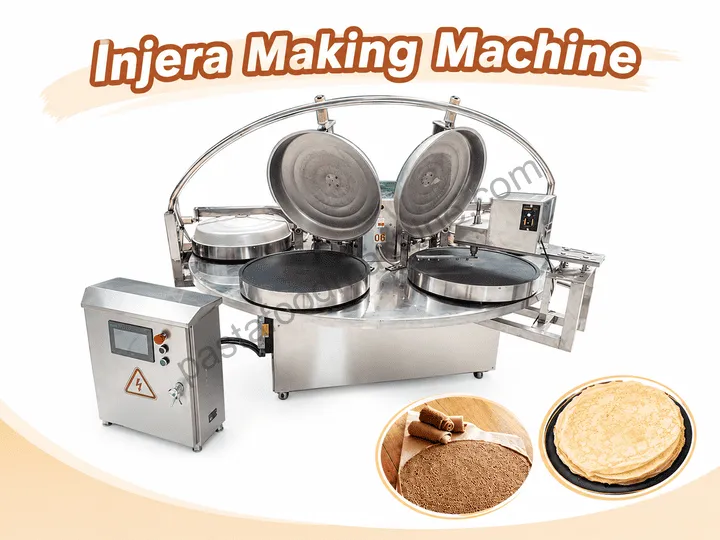
Our Injera making machine is a semi-automatic machine designed for producing Injera flatbreads and spring roll wrappers. The machine uses heated baking plates to bake the prepared batter into round wrappers. It requires only one operator and allows the thickness, baking temperature, baking plate quantity, and wrapper diameter to be adjusted according to different production requirements.
The machine is suitable for customers who need a practical solution for small- to medium-scale Injera production. A mixer machine is required to prepare the batter before it enters the injera maker machine.
What Is Injera?
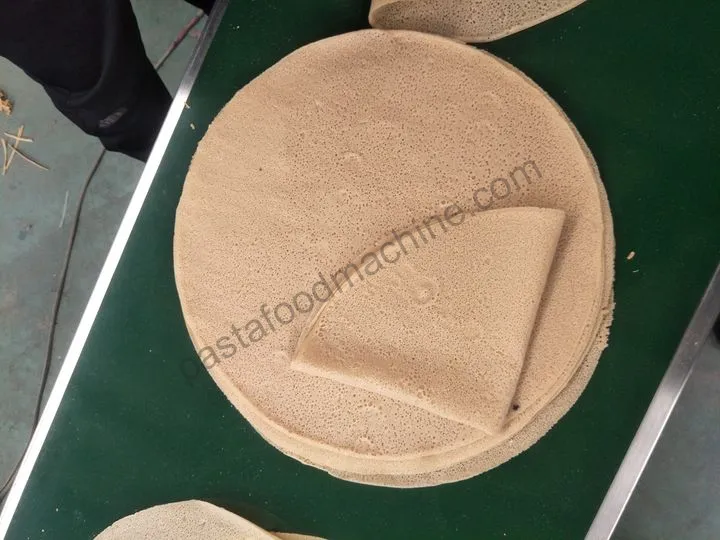
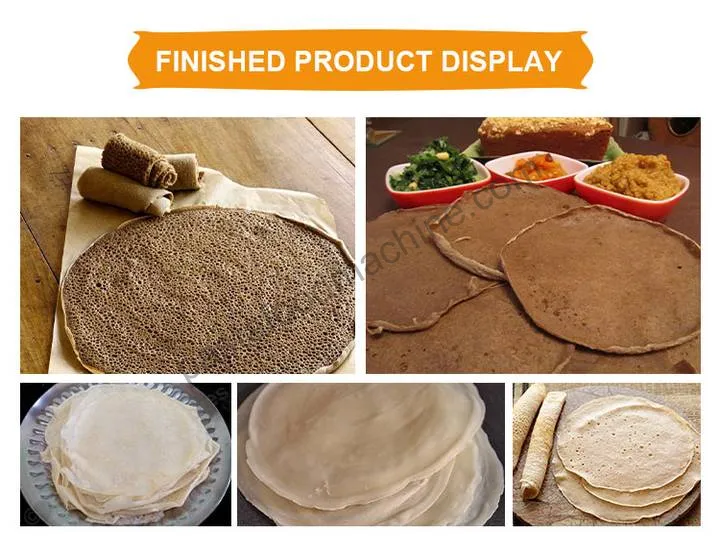
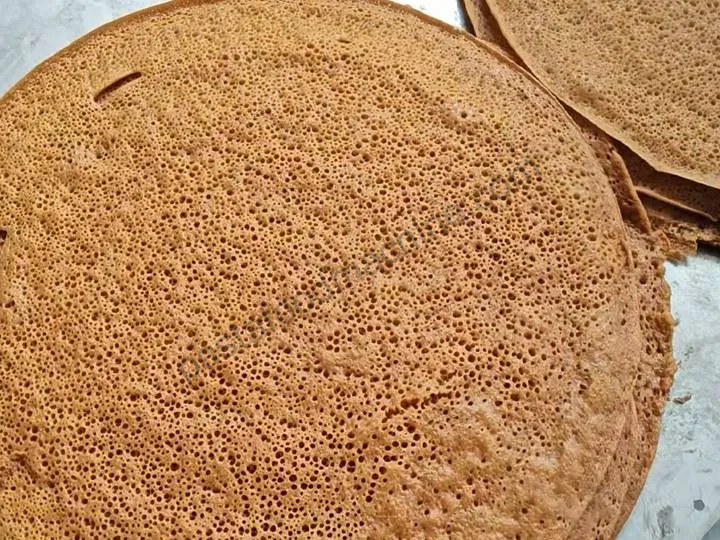
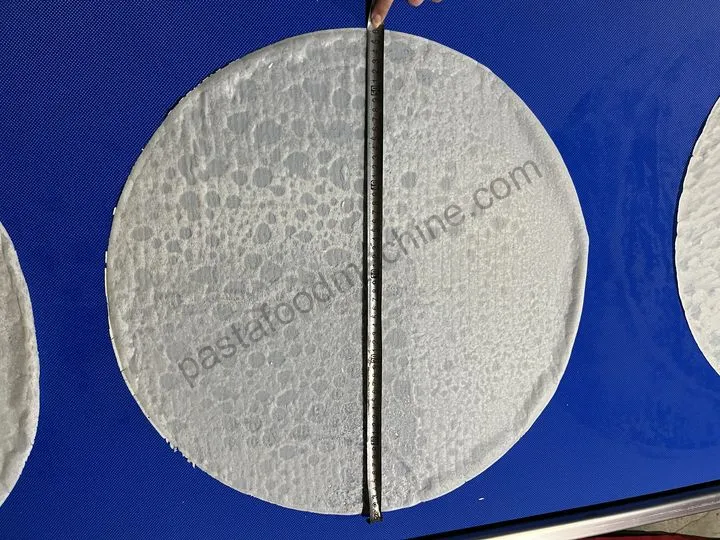
Injera is a traditional fermented flatbread widely eaten in Ethiopia and Eritrea. It is usually made from teff flour or a mixture of grains and has a soft, thin texture with a slightly sour taste. Its surface is characterized by many small pores formed during the fermentation and cooking process.
Injera is commonly served with meat, vegetables, sauces, and other dishes. It can be used as both a staple food and a base for serving different Ethiopian meals.
As Injera is traditionally prepared one piece at a time on a hot cooking surface, an Injera making machine can be used to simplify the batter feeding and baking process for customers who need to produce Injera in larger quantities.
Advantages of Our Injera Making Machine
- Semi-automatic operation: Only one person is needed to operate the machine.
- Adjustable thickness: The batter quantity can be adjusted to produce wrappers from approximately 2.5–4 mm thick.
- Adjustable diameter: Injera sizes from approximately 20–60 cm can be customized.
- Multiple baking plates: Available with 6, 9, 12, or 15 heating plates.
- Independent temperature control: Each heating plate can be controlled and adjusted separately.
- Wide application: Suitable for producing both Injera and spring roll wrappers.
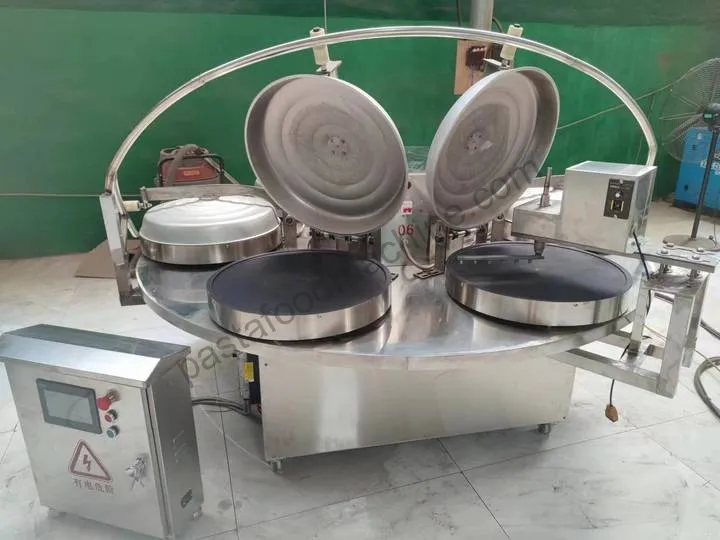
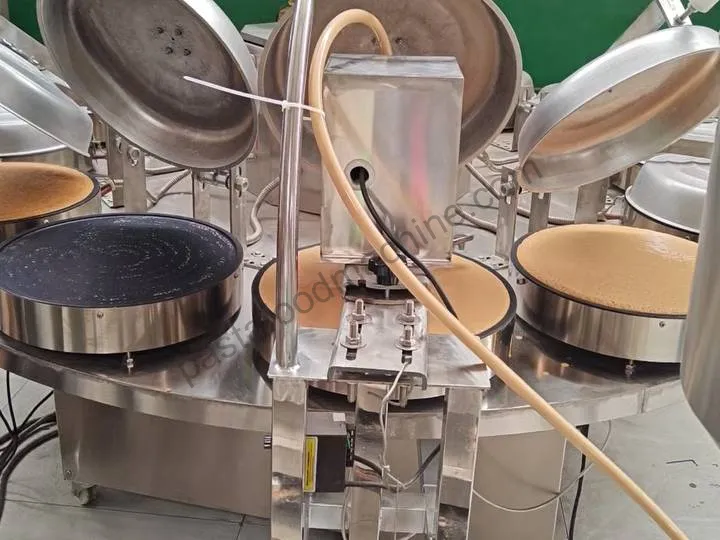
Ethiopian Injera Machine Working Video
How Does the Ethiopian Injera Machine Work?
The working process mainly includes batter preparation, batter feeding, heating, baking, and product removal.
1. Prepare the Injera Batter
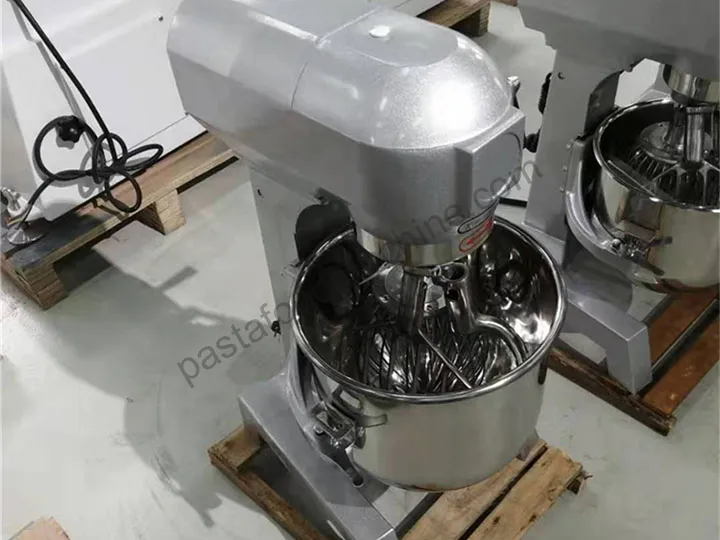
Before using the Injera making machine, the batter needs to be prepared with a mixer machine.
The ingredients are mixed evenly in the mixer to obtain the required batter. After mixing, the prepared batter is transferred into the batter storage tank of the Injera machine.
The batter storage tank provides a continuous supply of batter for the baking process.
2. Batter Feeding
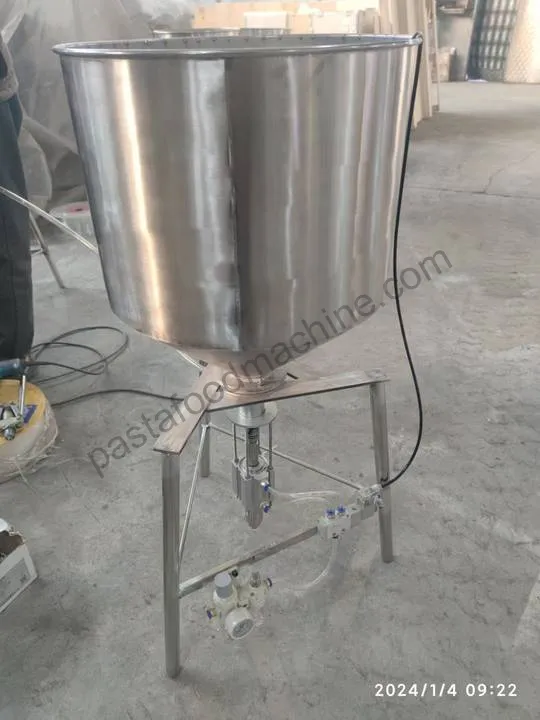
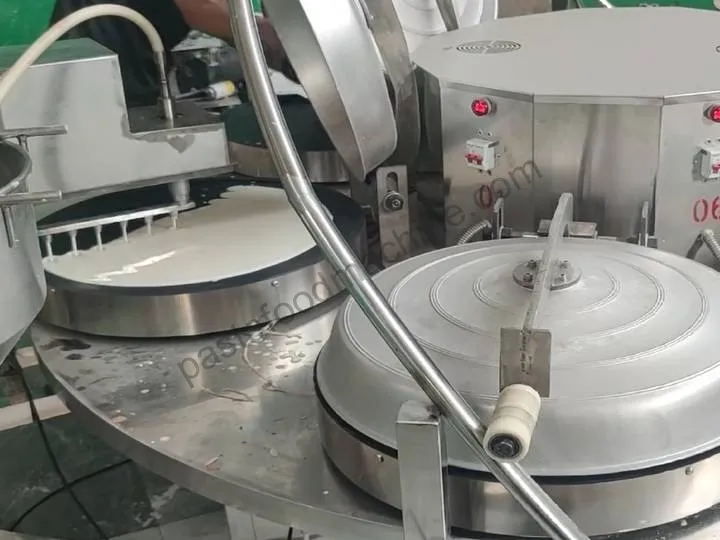
The upper part of the machine is equipped with a batter storage and feeding system. Through the feeding structure and pipelines, the prepared Injera batter is delivered to the working area.
Instead of manually pouring batter onto each baking plate, the machine uses its feeding system to supply the batter to the heated plates as they move into the corresponding position.
The amount of batter can be adjusted according to the required wrapper thickness. This makes it possible to produce different thicknesses according to the customer’s product requirements.
3. Heated Baking Plates Receive the Batter
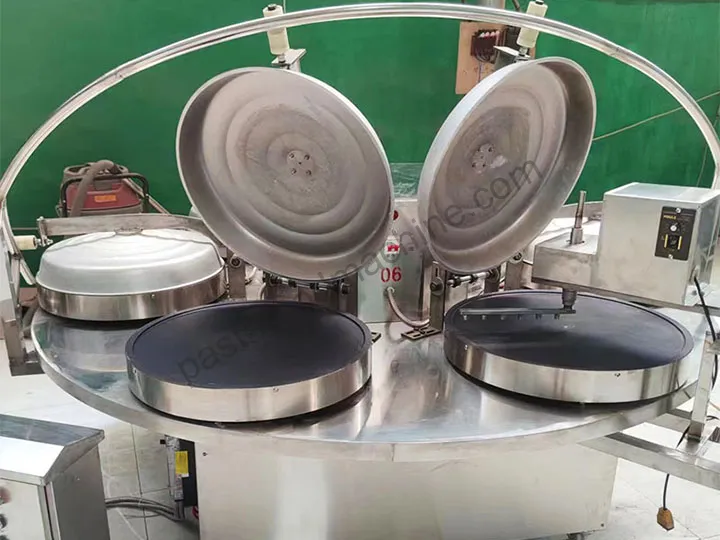
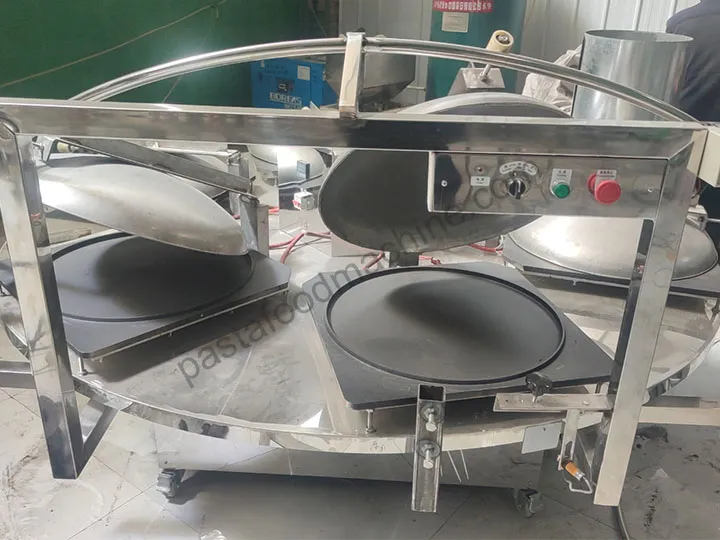
The machine is equipped with multiple circular heated baking plates. Each plate is heated to the required temperature before receiving the batter.
When a baking plate moves into the batter feeding position, the prepared batter is supplied onto the heated surface.
Because the baking plate itself is heated, the batter begins to heat immediately after contacting the plate.
Each heating plate can be controlled independently, and its temperature can be adjusted according to the production requirements.
4. Batter Forms a Round Wrapper
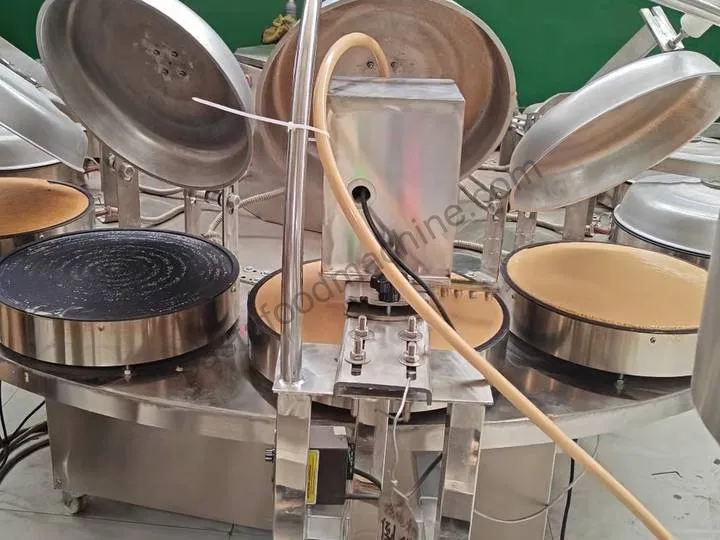
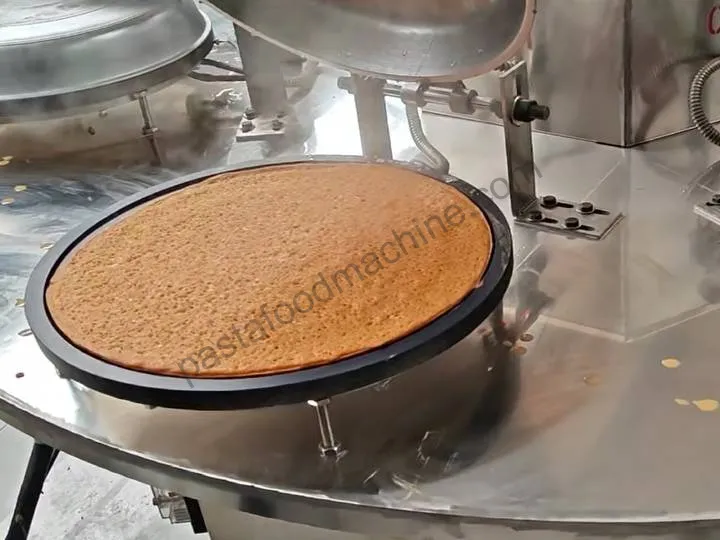
After the batter is supplied onto the baking plate, it spreads across the plate surface and forms a uniform round layer.
The amount of batter supplied affects the thickness of the finished wrapper. The machine can produce wrappers with a thickness of approximately 2.5–4 mm, depending on the batter quantity and production requirements.
The diameter of the finished Injera can also be customized. Available sizes range from approximately 20–60 cm.
5. Heating and Baking
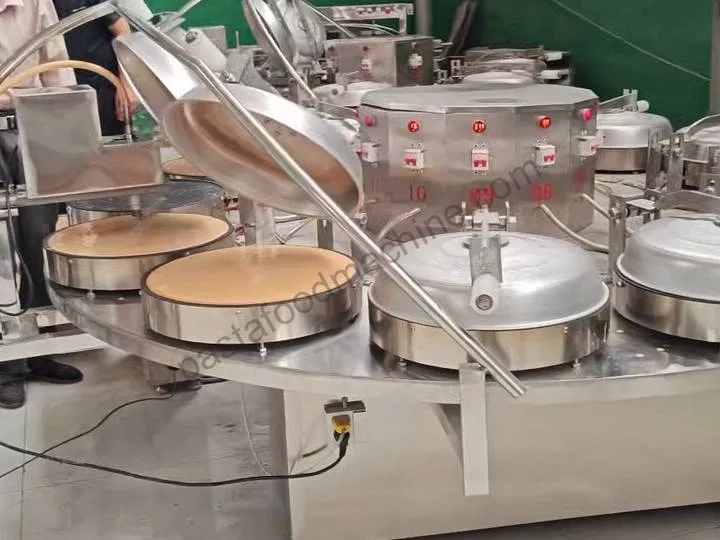
As the baking plates continue moving with the injera making machine, the batter is gradually heated and baked on the hot plate.
The machine uses multiple baking plates, allowing different plates to be at different stages of the production cycle at the same time. While one plate is being used for baking, other plates can be heating, receiving batter, or waiting for the finished product to be removed.
After completing one cycle, the baking plate continues moving and returns to the next production stage.
This creates a continuous circulating production process.
6. Finished Injera Removal
When the Injera reaches the required baking condition, the operator removes the finished product from the baking plate.
After the product is removed, the empty baking plate continues moving with the machine and returns to the batter feeding position for the next production cycle.
The semi-automatic design allows one person to operate the injera making machine, including monitoring the feeding process and removing the finished Injera.
Adjustable Injera Thickness
The Injera making machine allows the thickness of the finished product to be adjusted according to the amount of batter supplied.
The typical thickness range is approximately 2.5–4 mm. Customers can adjust the batter quantity according to their preferred product thickness and local market requirements.
This adjustment can also be useful when the machine is used to produce different types of food wrappers.
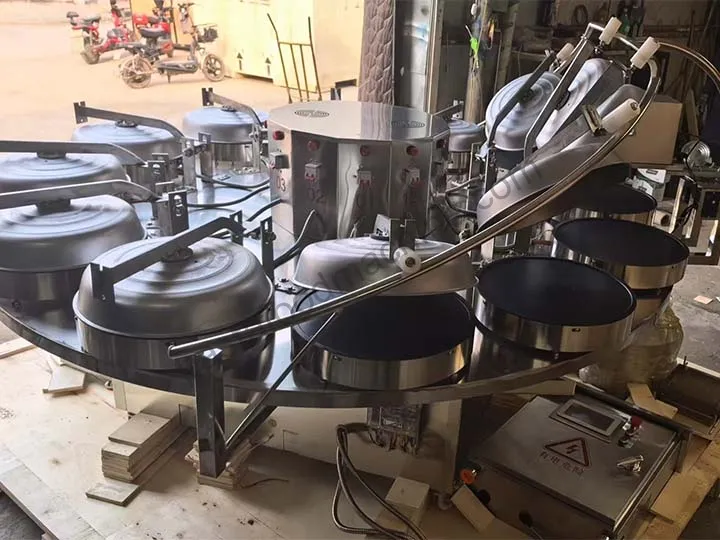
Customizable Baking Plate Quantity
Different numbers of baking plates can be selected according to the required production configuration.
Available options include:
- 6 baking plates
- 9 baking plates
- 12 baking plates
- 15 baking plates
The baking plate configuration can be customized according to the customer’s production requirements.
With multiple heated plates working in a circulating process, the machine can maintain a continuous production rhythm while reducing the need for manual batter placement.
Adjustable Baking Temperature
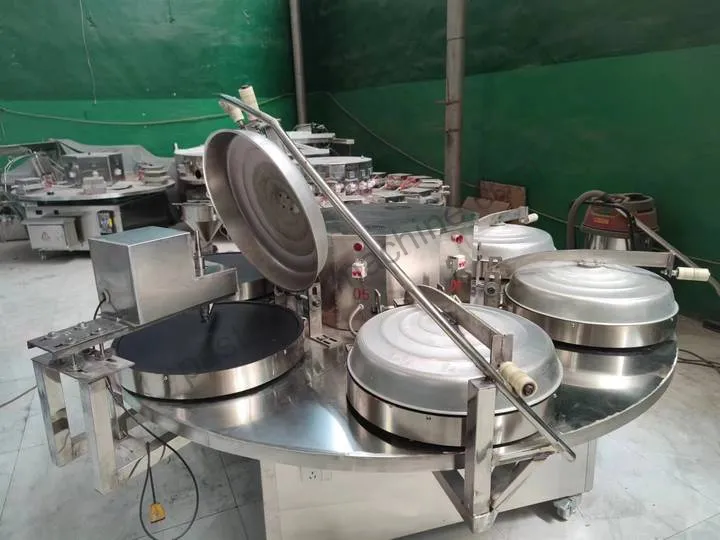
Each heating plate can be controlled independently.
The operator can adjust the temperature of the heating plates according to the production requirements. This makes it easier to manage the baking process when producing Injera or other types of wrappers with different specifications.
Customizable Injera Diameter
The diameter of the finished Injera can be customized according to the customer’s requirements.
The available size range is approximately 20–60 cm.
The customized size allows the machine to be adapted to different product specifications and market requirements.
One-Person Operation
The Injera making machine is a semi-automatic machine designed for simple operation.
Only one operator is required during normal production. The operator mainly monitors the batter supply, production process, and removes the finished Injera from the baking plates.
Compared with manually preparing each Injera one by one, the machine integrates batter feeding and heating into one production process.
Injera and Spring Roll Wrapper Production
Although the machine is commonly used as an Injera making machine, its application is not limited to Injera.
Depending on the batter formulation and product requirements, it can also be used for producing spring roll wrappers.
This makes the injera maker machine suitable for food businesses that need to produce different types of round or thin food wrappers using the same basic heating and feeding principle.
TZ-6 Injera Making Machine Specifications
The following are the specifications of our TZ-6 model:
| Item | Specification |
| Model | TZ-6 |
| Power | 36 kW |
| Voltage | 380 V, 50 Hz, 3 Phase |
| Capacity | 80–100 pcs/h |
| Injera Diameter | 60 cm |
| Machine Size | 2250 × 2250 × 1800 mm |
| Weight | 500 kg |
| Operation | Semi-automatic |
| Operators | 1 person |
| Baking Plate Quantity | 6 plates |
The actual production capacity may vary depending on the Injera diameter, wrapper thickness, batter characteristics, heating temperature, and operating conditions.
Why Use an Injera Making Machine?
For businesses producing Injera in larger quantities, the main advantage of the machine is that it combines batter feeding and heating into a circulating production process.
The operator does not need to manually pour batter onto every baking plate. Instead, the feeding system supplies the prepared batter, while the heated plates move through the different production stages.
The machine also provides several adjustable options, including:
- 2.5–4 mm adjustable thickness
- 20–60 cm customizable diameter
- 6, 9, 12, or 15 baking plates
- Independent heating plate temperature control
- One-person operation
- Injera and spring roll wrapper applications
For customers with different product sizes or production requirements, we can customize the baking plate configuration and finished product size accordingly.
Get in Touch for an Injera Making Machine
Looking for an Injera making machine for your business? Tell us your required Injera diameter, thickness, production capacity, and preferred baking plate configuration. Our team can recommend a suitable machine and provide a customized solution according to your production needs.
Contact us today for more information, machine details, and a quotation.